

Author: Jack Tan

  • How Fixing Your Premium Early Could Put Thousands Back in Kiwis’ Pockets

    How Fixing Your Premium Early Could Put Thousands Back in Kiwis’ Pockets

    If there’s one thing people hate about getting insurance in New Zealand, it’s the premiums that tend to go up in price over time. However, did you know that there’s a way to make sure you end up paying the same premium over time?

    Just like fixing your mortgage interest rate to have the same repayments for a set amount of time, you can also lock in your insurance premium at a fixed rate. This strategy, called level premium insurance, allows you to lock your insurance premium at a fixed rate so your payments stay the same for the next 5, 10 or even 20 years.

    Why should you fix your premium early?

    It’s common knowledge that the older you get, the more expensive the premiums you get charged by insurance companies. That’s why locking in your premium as early as possible is a great way to save money over time – especially if you are planning to keep your cover on a long-term basis.

    Locking in your premium early is a great way to:

    • Protect your family’s financial future
    • Free up more money to pay off other debts (such as your mortgage) or grow your savings and investments
    • Make it easier to keep up with your premiums over time, allowing you and your loved ones to stay covered and get peace of mind

    Example: Daniel is preparing for his future

    Daniel, age 25, sat down with an adviser to discuss his insurance needs. He just bought his first home, and wanted to make sure he could cover his mortgage payments. He also wants to pool together money for a legacy fund in the future.

    After the discussion, Daniel’s adviser recommended splitting his life cover into two separate policies – one ‘short-term’ policy and another ‘long-term’ policy.

    Short Term Cover (also known as ‘Stepped Premium Policy’)

    This short-term cover is designed to cover Daniel’s current financial obligations, such as his mortgage or ensure he and his loved ones are financially protected in case he becomes unable to work or passes away.

    With this in mind, Daniel chose a ‘stepped premium’ plan, which starts lower but increases in price as he grows older. This will help Daniel free up more money in the immediate term to address his short-term needs.

    As Daniel pays off more of his mortgage in the future, he can then review his policy with his adviser once more to match the now lower mortgage debt he has (which will also reduce his premiums).

    Long-Term Cover (also known as a ‘Level Premium Policy’)

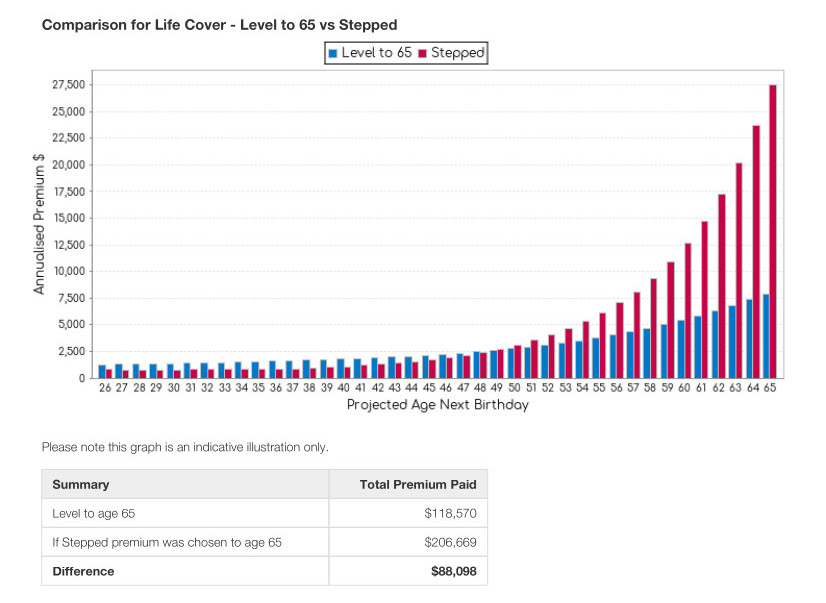
    For Daniel’s long-term goals, such as providing a legacy fund for his family, he locked in a ‘level premium’ plan up to age 65.

    This allowed him to fix his premiums for this plan at a fixed rate of $105 per month for 40 years.

    Compared to his short-term ‘stepped premium’ plan, this roughly costs about $38.50 more each month. However, by around age 48, the costs between the two plans will begin to intersect, with the long-term level premium insurance becoming cheaper from this point onwards.

    If Daniel sticks to this plan until age 65, he would end up saving around $88,000 compared to staying on a stepped premium the entire time.

    To summarise, think of structuring your insurance payments like investing early in your KiwiSaver. The earlier you fix your premiums and stick to a solid payment structure, the more you end up saving in the long run.
    Final Thoughts: Buying Insurance in New Zealand the Smart Way

    Getting insurance isn’t just about taking out a policy to make sure you and your loved ones are financially protected. It’s also about buying these policies with a smart payment strategy in mind.

    Buying insurance isn’t just about getting a policy and paying premiums. It’s about making smart choices that fit your life now and in the future.

    By combining stepped premiums for short-term cover with level premiums for long-term protection, you can create a cost-effective and flexible payment plan to help you stay financially ahead for both your short-term obligations and long-term plans.

    Let’s Chat!

    If you are interested in exploring how much you can save by employing this insurance payment strategy, or want to go over your current insurance plan, fill out the form below.

    Our licensed insurance adviser will give you insurance recommendations and advice in plain language through our free insurance review session.

    ← Back

    Thank you for your response. ✨

  • Rising Unemployment in New Zealand: How Redundancy Cover Can Protect You

    Rising Unemployment in New Zealand: How Redundancy Cover Can Protect You

    According to Stats NZ, unemployment has increased to more than 5% as of June 2025. This has made job security a serious concern for a growing number of Kiwis.

    If you are a full-time employee, getting redundancy cover can help ensure you can keep up with your mortgage repayments in case you are made redundant.

    What is Redundancy Cover?

    Redundancy cover is designed to protect your income if you lose your job due to involuntary redundancy, which can occur through events such as your company downsizing, restructuring, or closing

    Just like a salary, it provides a monthly payout for a set period (usually up to 6 months). This gives you much-needed breathing room, as it allows you to comfortably keep up with your mortgage or rent payments while you look for your next job.

    In short, with redundancy cover, you won’t have to worry about burning through your savings or going through WINZ’s now stricter application processes to get job seeker support.

    What’s the difference between Redundancy Cover, Income Protection, and Mortgage Protection?

    It can be easy to confuse redundancy cover with income protection and mortgage protection, and understandably so – these three policies can help you keep up with your mortgage payments in case you lose your job. However, there are key differences between these three insurance policies:

    Income Protection and Mortgage Protection VS Redundancy Insurance

    Mortgage protection and income protection only apply if you are unable to work due to sickness or injury. These do not apply when you lose your job due to redundancy and therefore have nothing to do with job security.

    How Does Redundancy Cover Work?

    As mentioned earlier, redundancy cover pays you a monthly benefit of up to 6 months in case you are made involuntarily redundant. This helps you comfortably look for your next job without worrying about your mortgage, rent, and other expenses.

    There are a few important things to note:

    • Maximum claim limit: You can only receive payouts for a maximum of 6 months.
    • Stand-down period: Redundancy cover usually has a 6-month stand-down period. This means you need to have this policy in place for a minimum of six months before you can make a claim.
    • Waiting period before payment: Once you have your redundancy claim approved, there is generally a 4-week waiting period before you receive your first payment.

    As a final note, redundancy insurance is meant to support you through the transition period of finding a new job. It is not intended to replace your full-time income.

    Who Can Benefit from Redundancy Cover?

    In general, as long as you are a full-time employee, redundancy cover can give you the financial safety net you need to keep up with your expenses in case you are made involuntarily redundant. This can be especially helpful for:

    1. Homeowners who want the peace of mind of having their mortgage payments taken care of in case they lose their job
    2. Families who rely on a single income earner or are on a tight budget
    3. Anyone who wants an additional financial buffer on top of their general savings

    Final Thoughts: Protect Your Income and Have Peace of Mind

    If you are suddenly made redundant tomorrow, how long can your savings keep up with your current expenses?

    If the answer makes you uneasy, it may be worth considering getting redundancy insurance. Doing so can give you the confidence you need to focus on what you need to do in case you are made redundant: finding your next job.

    Let’s Chat!

    If you are interested in learning more about redundancy cover and whether it’s right for you, schedule a free insurance review by filling out the form below.

    Our licensed insurance adviser will give you insurance recommendations and advice in plain language through our free insurance review session.

    ← Back

    Thank you for your response. ✨